From Shelf to Doorstep: How a Lana Ultra 2 Order Actually Moves
On a steel shelf in a climate-controlled storeroom, a single Lana Ultra 2 unit sits inside its sealed retail box, waiting. Nobody has ordered it yet. It has a SKU, a batch code, a shelf position, and a job: to move from that spot to a customer’s doorstep in Singapore without damage, delay, or a compliance misstep. Most shoppers only ever see the last five minutes of that journey — the courier at the door, the discreet parcel, the unboxing. What happens before is where the real retail work lives, and it is worth following one unit through the entire chain.
This is not a buyer’s review. It is an operational walk-through of how a single product listing becomes a delivered parcel. If you have ever wondered why some orders arrive in a day and others take three, or why a package shows up in plain packaging with no branding, the answer usually sits in the six stages below. The same mechanics apply whether you are buying a lana pix 20k or any other high-puff disposable on the shelf.
Stage One: Intake and the Warehouse Shelf
Before a Lana Ultra 2 ever appears on a website, it arrives as a carton. Intake is the least glamorous part of retail and the one that determines everything downstream. Staff check the carton against the purchase order, confirm quantities, and inspect for crushed corners or broken seals. Each unit gets logged with a batch number, an arrival date, and a storage location. In a well-run store, that location is not random — it is assigned by velocity. Fast-moving SKUs go on easy-to-reach shelves; slower ones go higher or deeper.
Storage conditions matter more than most customers realise. Disposable vape devices contain a battery and a liquid reservoir, and both are sensitive to heat. A storeroom that bakes in the afternoon sun will degrade stock quietly, producing units that look fine but underperform. That is why serious operators keep intake areas shaded and ventilated, and why shelf rotation follows a first-in-first-out rule. The unit sitting at the front of the shelf is the one that arrived earliest, not the one that looks nicest.
This stage is also where authenticity checks happen. A sealed box with a verifiable batch code is worth more than a slightly cheaper carton with no traceable origin. For a category like this, traceability is the difference between a product that works as described and one that becomes a customer service problem three weeks later.
Stage Two: Listing, Copy, and the Digital Shelf
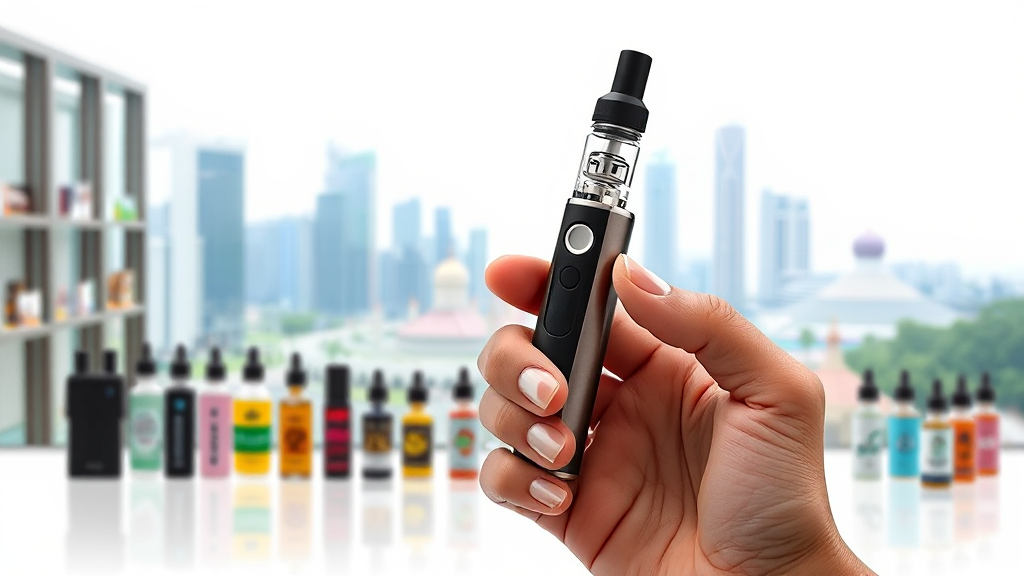
The physical shelf has a twin: the product listing. Once a unit is logged, someone has to turn its attributes into a page a shopper can actually use. Puff count, battery capacity, flavour profile, charging method, dimensions, and pack contents all need to be accurate. A listing that overstates performance generates returns. A listing that understates it loses the sale. Getting this right is a copywriting and data problem as much as a merchandising one.
Good listings also anticipate the questions that would otherwise become support tickets. Does it come charged? Is it draw-activated or button-fired? How long does it realistically last? When a store carries a broad catalogue — a marbo vape 25k, a compact pen-style device, a pod system — each listing needs its own accurate specification set rather than a copy-pasted template. Shoppers compare across devices, and vague specs erode trust fast.
Pricing sits alongside copy. A listing price has to cover landed cost, storage, pick-and-pack labour, payment processing, last-mile delivery, and the inevitable small percentage of failed deliveries. Retailers who price only against the product cost eventually discover they are subsidising every order. The number on the page is a summary of the entire chain, compressed into one figure.
Stage Three: The Order Lands and Picking Begins
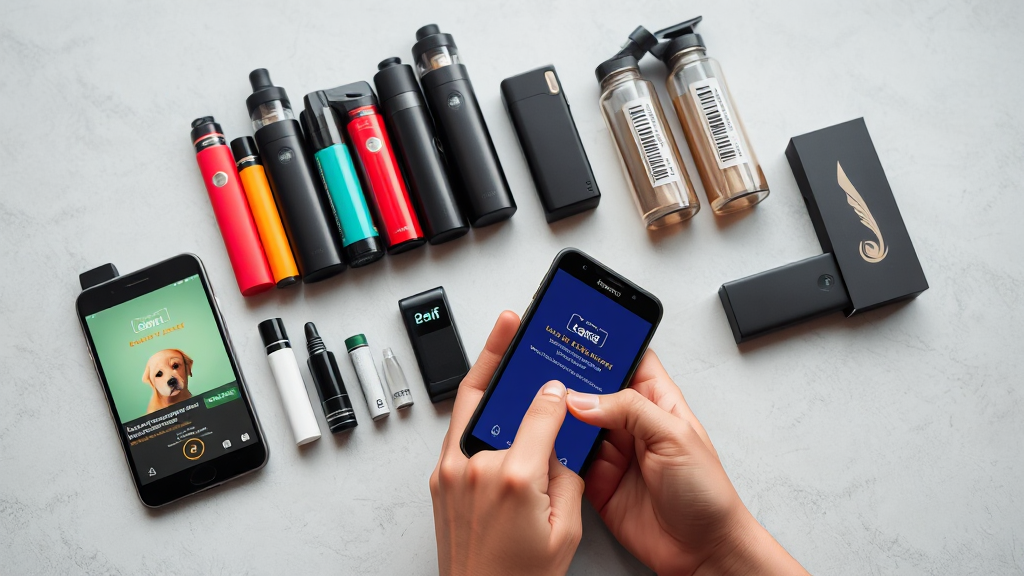
An order arrives. In a small operation it might come through a messaging app; in a larger one it lands in an order management system. Either way, the first human action is verification: confirm the item, confirm the variant, confirm the delivery address, and confirm the payment method. Cash on delivery adds a step here, because the order cannot simply be released — it has to be flagged for a courier who can collect payment at the door.
Picking is where errors are born. A picker reads the order, walks to the shelf, and pulls the unit. The classic mistake is grabbing the wrong variant from an adjacent slot, which is why good warehouses separate visually similar products and label shelves clearly. A picker handling a lana pen plus 9k alongside a larger device needs the shelf layout to make the distinction obvious at a glance.
After the pull, the unit is scanned against the order. That scan is the checkpoint that catches most mistakes before they leave the building. Without it, accuracy depends entirely on human attention, which is fine on a quiet Tuesday and unreliable during a promotion. Scanning converts a hopeful process into a verifiable one.
Stage Four: Packing for Discretion and Durability
Packing serves two masters: the product must survive the trip, and the parcel must not announce its contents. Discreet packaging is a genuine customer expectation in this category, and it is also a practical one. A plain outer box with no product branding, no flavour names on the label, and a neutral sender reference protects privacy and reduces the chance of a parcel being tampered with in transit.
Inside, the unit needs protection. Disposable devices are not fragile in the way glass is, but a crushed box damages the retail packaging and turns a new product into a discounted one. Bubble wrap, a snug fit, and a sealed inner bag handle most of it. If the order includes multiple items — say a marbo 25k alongside accessories — the packer has to balance protection against bulk, because oversized parcels cost more to ship and are harder to hand over at the door.
Documentation goes in at this stage: the packing slip, any delivery notes, and the payment record for cash-on-delivery orders. The parcel is then weighed and sealed. Weight is a quiet quality check — a parcel noticeably lighter than expected usually means something was left out.
There is a merchandising angle here too. A packer who notices that a particular lana pix variant keeps arriving with dented boxes is feeding useful information back to intake. Packing is not just the end of the warehouse process; it is a sensor for the whole operation.
Stage Five: Dispatch, Handover, and Courier Routing
Sealed parcels move to a dispatch area and are sorted by route. In Singapore, route density is everything. A courier with twelve deliveries in one estate completes them far faster than a courier with twelve spread across the island. Good dispatch software groups orders geographically and sequences them so the driver is not doubling back.
Handover to the courier is a formal step in a well-run store. Parcels are scanned out, counted, and reconciled against the manifest. If a parcel leaves the building without a scan, it effectively disappears from the system until it is delivered — and if it is never delivered, nobody can prove where it went. That single scan is the difference between a resolvable dispute and an unresolvable one.
Cash-on-delivery orders get special handling at this point. The courier needs to know the amount to collect, needs to carry change, and needs a process for a customer who refuses or cannot pay. Stores that handle a high volume of COD build a short script for drivers: confirm the order, collect, hand over, mark complete. It sounds trivial until you have fifty of them in a day.
Dispatch is also where timing expectations are set. A cut-off time — say, orders before mid-afternoon ship the same day — is a promise, and it only holds if intake, picking, and packing have all kept pace. When a store reliably hits its cut-off, customers stop asking when their parcel will arrive.
Stage Six: Last Mile and the Doorstep
The final stage is the one customers actually experience. The courier arrives, confirms the recipient, collects payment if required, and hands over a plain parcel. The customer opens it, checks the unit, and either it works or it does not. Everything that happened on the shelf, in the listing, in picking, and in packing funnels into that thirty-second moment.
This is why last-mile problems are almost never purely last-mile problems. A late delivery is often a dispatch sequencing issue. A wrong item is usually a picking error that a scan should have caught. A damaged box traces back to packing. When a store investigates complaints properly, the root cause is usually three stages upstream of the complaint itself.
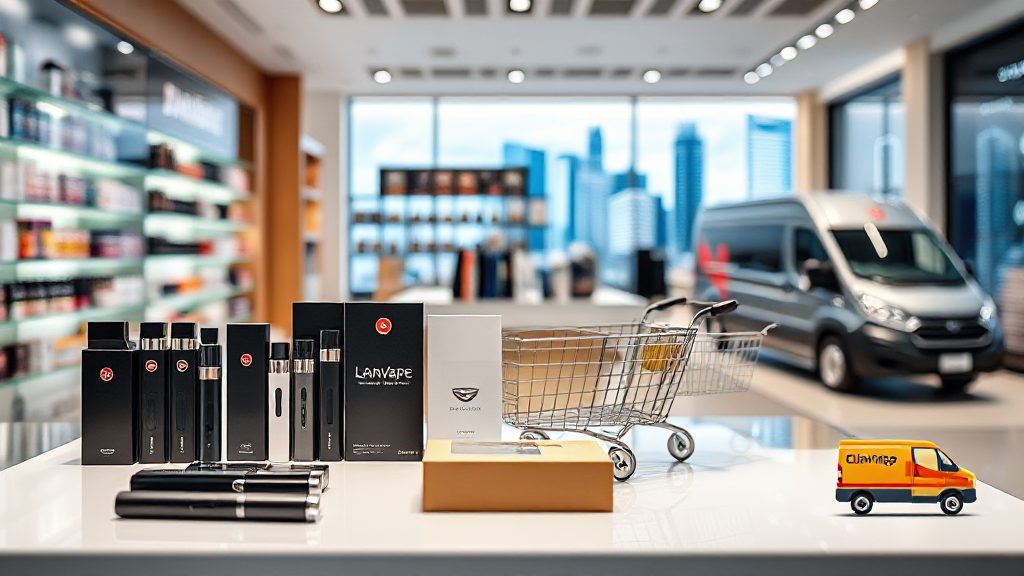
That is also where the catalogue breadth becomes operationally interesting. A store running a broad range — a snowwolf 16k next to a compact pen, or a heated-tobacco line like terea singapore stock alongside disposables — has to keep intake, shelf layout, and picking logic coherent across very different product shapes. The more varied the catalogue, the more the warehouse layout has to do the work that memory used to do.
After delivery, the loop closes. Delivery confirmations feed back into stock levels, which trigger reorders, which start the whole cycle again at intake. A unit that sells quickly gets a better shelf position and a more prominent listing. A unit that sits gets reviewed, repriced, or quietly retired. The lana ultra 2 that started this story on a steel shelf is, by the time it reaches a doorstep, the product of a dozen small decisions made by people the customer will never see.
That is the honest shape of online vape retail. The visible part is a product page and a delivery notification. The real work is a chain of checkpoints — intake, listing, picking, packing, dispatch, last mile — each of which can quietly break the whole thing. Stores that treat those stages as a system, rather than a series of chores, are the ones whose parcels arrive on time, in one piece, in plain packaging, exactly as promised. The unit on the shelf is patient. The operation around it is what decides how long it waits.