Desentupidora em Quatro Barras: the short answer, then the detail
A desentupidora Quatro Barras clears blocked drains, sewers and grease traps using mechanical and high-pressure equipment, usually within a same-day window. The job is not just poking a hole through the clog — it is diagnosing where the obstruction sits, choosing the right tool for that pipe, and confirming the line flows again before leaving. If you are standing in a flooded kitchen or watching water back up in the yard, that is the short version you need before you call anyone.
What follows is the detail: what the service actually covers, the situations that call for it, how the clearing process works, and what a technician will realistically do on site. No sales pitch, just the mechanics of the job so you can judge whether you are being told the truth.
What a desentupidora service actually involves
People often picture a man with a plunger. In practice, a professional drain-clearing service in Quatro Barras works on three distinct fronts: the fixture (sink, toilet, floor drain), the branch line that connects it to the main stack, and the main sewer line itself. A blockage in any of those behaves differently and needs a different approach.
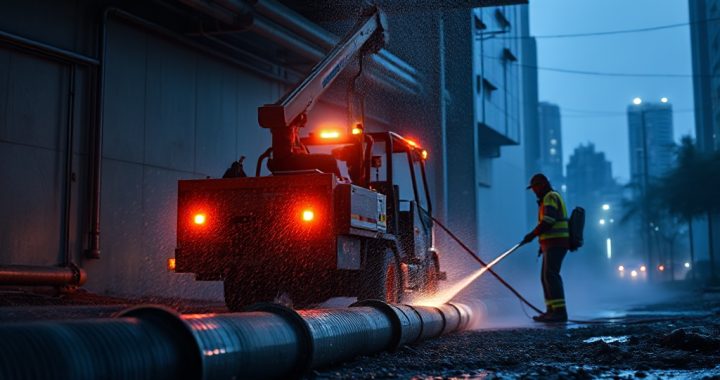
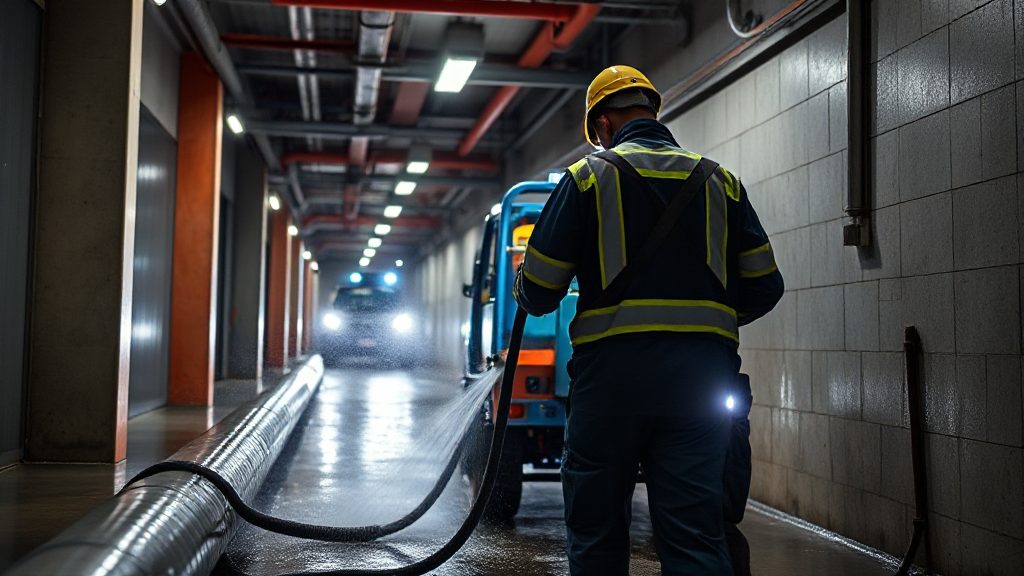
The core toolkit is fairly consistent across the trade. A manual or electric auger handles soft clogs close to the fixture. A high-pressure jetter — a hose that fires water at several thousand PSI — scours grease, scale and roots from the pipe wall. A drain camera lets the technician see what is actually inside the line instead of guessing. The best operators use the camera first when the cause is unclear, because clearing the wrong line wastes everyone’s time.
Drains, sewers and grease traps are not the same job
A kitchen sink clog is usually grease and food solids sitting in the trap or the branch line. A floor drain backing up in a basement often points to a blocked main. A grease trap — common in restaurants and commercial kitchens — needs its accumulated fats pumped out and the baffles cleaned, not just jetted. Treating all three as one problem is how a cheap fix turns into a repeat call two weeks later.
For a residential property, the most common call is a slow-draining shower or a toilet that gurgles when the washing machine empties. Both usually mean the branch line is partially obstructed. For a condominium, the pattern shifts toward shared stacks and garage floor drains, where one blockage affects several units. A desentupidora Quatro Barras PR that handles both residential and commercial work will usually ask which fixture is misbehaving before quoting, because that single question narrows the diagnosis fast.
When you actually need to call someone
Not every slow drain is an emergency. A single sink that drains slowly but clears with a plunger is a maintenance issue, not a crisis. The calls that justify professional equipment share a few recognizable signs.
- Multiple fixtures backing up at once. If the toilet, shower and sink all struggle, the blockage is in the main line, not the fixture.
- Sewage odor indoors. A smell that lingers after ventilation usually means a dry trap, a cracked pipe or a partial blockage holding waste.
- Gurgling sounds from drains when an appliance discharges — a classic sign of a venting or main-line problem.
- Water rising in unexpected places, such as a floor drain in the garage or laundry area.
- Repeat clogs in the same spot within weeks, which suggests roots, scale or a collapsed section rather than a simple clog.
Chemical drain cleaners are the most common mistake at this stage. They can melt a small grease clog, but they also generate heat that damages older PVC and cast-iron joints, and they do nothing against roots or a sagging pipe. If a chemical has already been poured and the drain is still blocked, tell the technician — it changes how the line is handled.
Another mistake is assuming a plunger failure means the pipe is broken. Most of the time it just means the clog is beyond the trap, where a plunger cannot reach. The professional assessment is cheap compared with digging up a yard on a hunch.
How the clearing process works, step by step
A competent crew follows a predictable sequence. The order matters, because skipping a step is how pipes get damaged.
- Interview and visual check. Which fixtures are affected, when it started, whether chemicals were used, and whether there is a cleanout access point.
- Locate the blockage. Camera inspection or a rod test to find whether the obstruction is in the branch, the stack or the main.
- Clear it with the right tool. Auger for soft, near clogs; hydro-jetting for grease, scale and roots; suction for grease traps and holding tanks.
- Verify flow. Run water through the line and confirm it drains at full speed, not just that it moves.
- Report and advise. Tell you what was found, whether the pipe is sound, and whether a follow-up — such as root cutting or a repair — is likely.
The verification step is the one that separates a real fix from a temporary poke. A line that drains slowly after clearing is still partially blocked, and it will back up again. Ask the technician to show you the camera footage if the cause was not obvious; a legitimate operator will not hesitate.
On site, expect the crew to protect the floor around the work area, use a machine that fits the pipe diameter, and clean up after themselves. Hydro-jetting in particular produces wastewater, so containment matters. If a technician arrives without a camera or a jetter and proposes to solve a main-line blockage with a hand auger, that is a signal to ask questions.
For anyone comparing options, the practical test is simple: a desentupidora em Quatro Barras PR that explains the diagnosis before quoting, confirms flow after clearing, and tells you when a repair is the honest answer rather than another clearing is the one worth keeping on file. Everything else is guesswork with a hose attached.